Picture a village at night where every streetlight has been switched off.
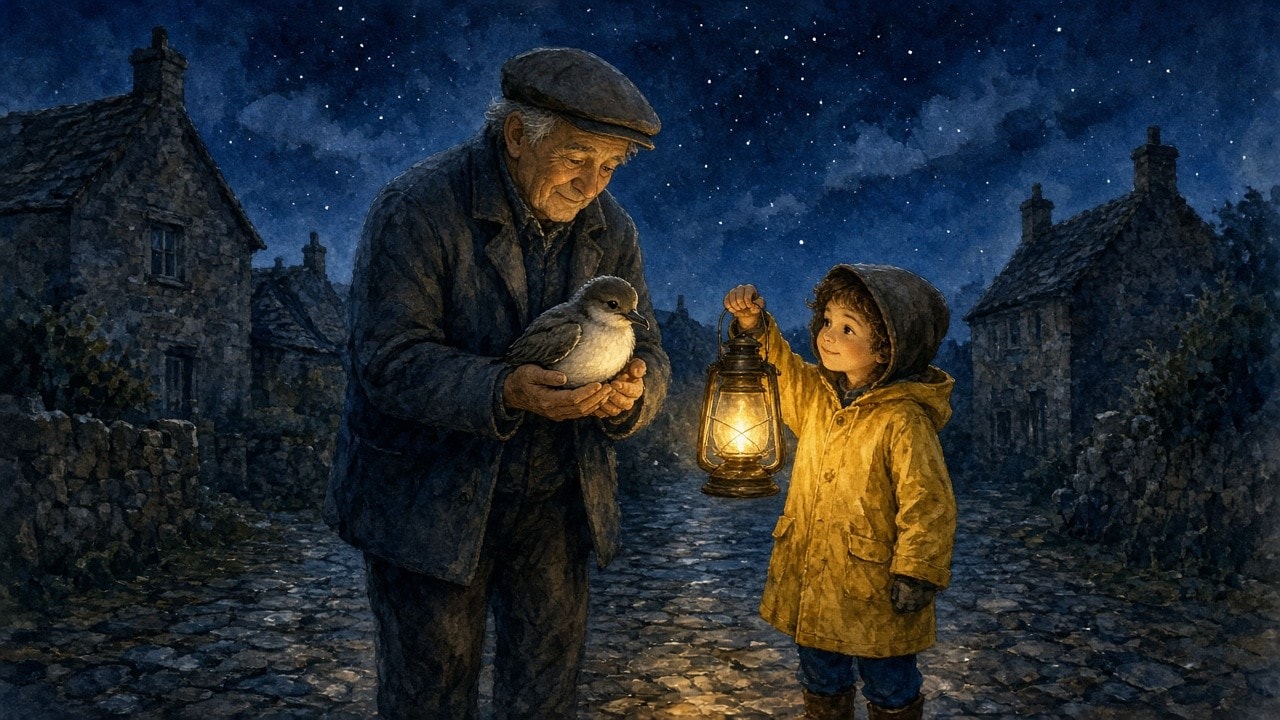
The lane is dark. The cottages are quiet. Overhead, the stars are so thick that you can see the pale band of the Milky Way. And somewhere in the dark, someone is walking slowly through the narrow streets, looking for a bird that needs help.
This is not a movie scene. It happens every autumn on Corvo, the smallest and most northerly island in Portugal's Azores.

Why a whole island goes dark
The birds are Cory's shearwaters. Each year, the young ones spend about three months in their nests. Then comes the night of their very first flight, when they have to find the ocean. They steer by the stars.
The trouble is that the glow of artificial light can throw them off. Many young shearwaters get confused by it and end up crashing into the village streets instead of reaching the water.
The community noticed the problem back in 1991, and local people began roaming the village at night to rescue the fallen birds. Since 2019, the island's 450 or so residents have gone one step further: for five nights each autumn, they switch off the public lighting. According to photographer Andrea D Zanenga, who documented it for The Guardian, households aren't required to switch off the lights at home, but many choose to.
The rescue crew
When the island sinks into darkness, the stars take over. And so do the volunteers, many of them young, who walk the village to look for any bird that has landed where it shouldn't. Each rescued bird spends the night resting in a cardboard box. The next day, it is released from a cliff close to the ocean, with a second chance to reach the water.
It adds up. The campaign says more than 30,000 Cory's shearwater fledglings have been rescued across the Azores since 2015, about 6,000 of them on Corvo alone.
What a dark night teaches us
What we love about this story is how small each piece is. Nobody on Corvo is trying to fix the whole ocean. A light goes off. A young volunteer walks the dark lanes. A neighbor lifts one tired bird into a box. Then thousands more small kindnesses add up.
There's something else in it, too. The people who care most are often the young ones. As the photographer put it, there is always hope when we bring the next generation in and teach them to care.
It's also a lovely reminder to look up. If you read our piece about your first shooting-star wish, you know how many of us remember the night sky best through the person standing beside us.
Your turn
Do you have a favorite starry-night memory? Maybe it was a camping trip, a rooftop, a quiet road, or the back step with someone you love. We'd genuinely love to hear it.
One small step for this week: pick one evening, switch off a light you don't need for ten minutes, step outside or sit by a window, and look up. Name one star or one constellation, or simply notice how many you can see. Then tell someone about it.
And if you want to keep that curious, observant feeling going, our free games are made for all ages. Try Names & Faces to sharpen your memory, or I Have a Feeling to practice your intuition.
Keep looking up, and keep dreaming.
Source: Andrea D Zanenga, "Lights out: the island that goes dark to save young seabirds – in pictures" The Guardian, Oct 25, 2026. This article is our own retelling in our own words. All illustrations are original LiveToDream art.
The illustrations are original LiveToDream art. LiveToDream is not affiliated with or endorsed by The Guardian.
By G Fuzes · More articles