
Think back to the first time you read a whole page out loud.
Maybe your voice wobbled on the long words. Maybe you lost your place and had to start the sentence over. And maybe someone sat right beside you the whole time, not correcting, not hurrying, just listening.
Who was that for you?
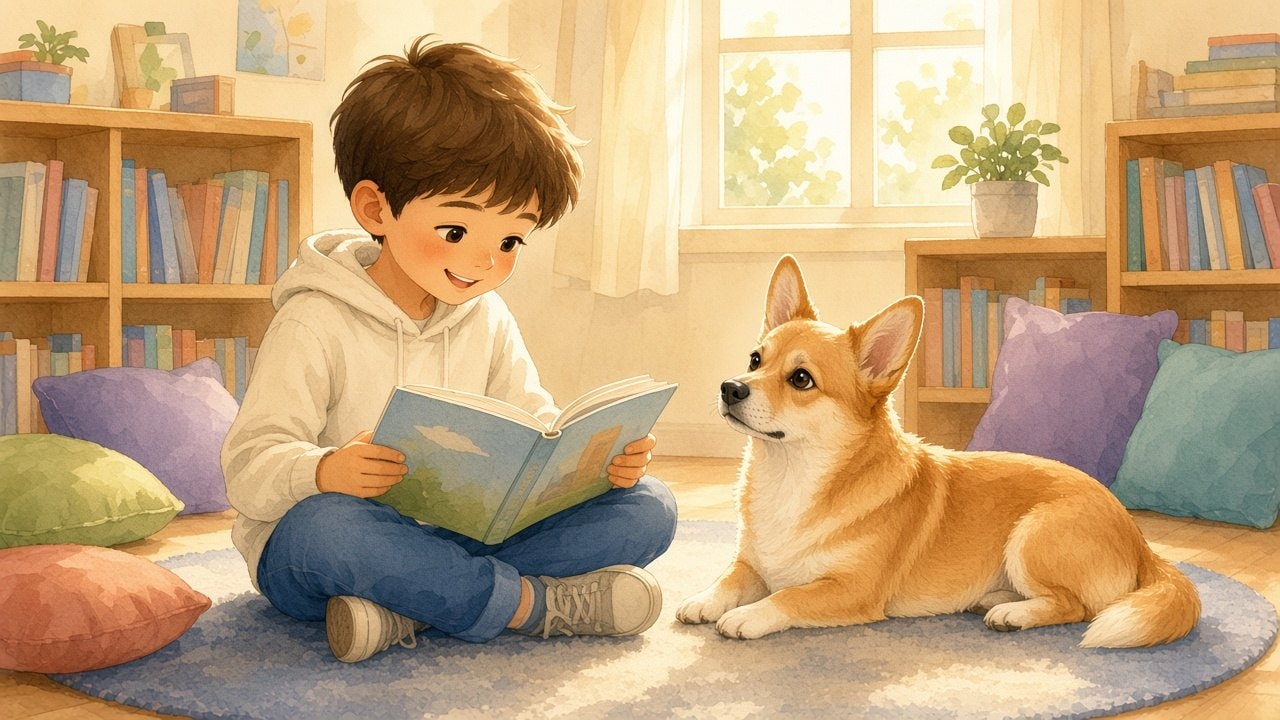
The patient listener
For many of us, it was a grandparent on a porch swing, a parent at bedtime, a big sister, or a teacher who somehow always had time. They didn't say much. They nodded, they smiled at the funny parts, and they waited while we sounded out the hard words.
Looking back, that patience was a gift. Reading aloud is brave work for a small child. Every word is a little leap, and it's a lot easier to leap when nobody is keeping score.

Why a dog makes such a good audience
Now picture that same patient listener with a wagging tail.
A calm, friendly dog may be one of the least judgmental audiences in the world. A dog doesn't mind if you skip a line or read the same page twice. A dog doesn't glance at the clock. A dog simply settles in and listens, which is exactly what a nervous young reader needs.
That's the idea behind read-to-a-dog programs. Children read aloud to trained therapy dogs, with the dog's handler close by to keep the visit calm and happy.
Two libraries, two good listeners
At the Tony Hillerman Library in Albuquerque, New Mexico, Read to the Dogs meets every Thursday from 4 to 5 p.m. Children of all reading levels are welcome to read aloud to licensed therapy dogs and their owners in a relaxed setting meant to encourage early reading. The listing says it's free, with no registration required.
Up in British Columbia, the Sooke branch of the Vancouver Island Regional Library runs Paws and Tales: Read to Rosie for kids ages 7 and up. Young readers bring a book and sign up for a 20-minute session with Rosie, a certified therapy dog from the Pacific Animal Therapy Society. The library calls Rosie a patient and friendly listener, and says the program helps children practice reading aloud, build confidence, and have fun with reading. Sessions run Wednesday and Thursday afternoons through December 17, 2026, and an adult comes along with each child. In the library's photo, Rosie is the one wearing the scarf. Her human is Barb.
How to find your hour
You don't need to live in Albuquerque or on Vancouver Island. Programs like these turn up at public libraries in many places, often with a playful name and a dog's photo on the flyer.
- Check your library's events calendar for "read to a dog" or "therapy dog." These are often listed under children's or family events.
- Ask at the children's desk. Librarians usually know which therapy dog teams visit, and when.
- Read the sign-up details. Some programs are drop-in, while others ask you to book a short time slot ahead.
- Bring a favorite book. A story your child already loves makes the first visit easier.
If there's no program nearby yet, a calm family dog, a patient grandparent, or even a well-loved stuffed animal can be a wonderful listener at home. The point isn't the dog. The point is someone who listens without hurrying.
Looking for the time to start? This weekend, when the clocks fall back, you get an extra hour for free. We wrote about that in One Extra Hour: What Would You Do With It?
Your turn
So tell us: Who was the patient listener who helped you learn to read? A grandparent, a teacher, a big brother, or maybe a dog of your own?
Share the memory with the young readers in your life, and with us when you see this on social media. Then, if you can, pass the gift along: an hour, a good book, and your full attention.
Happy reading, and keep dreaming.
Looking for more to enjoy together? Our free games are made for all ages, including memory games, word games, and a fun way to practice your intuition. You'll also find more uplifting articles, plus Memory Tips & Tricks, at LiveToDream.com.
By G Fuzes · More articles